Overview
This study investigates the production of semiconductor nanosensors through the anaerobic digestion and bioremediation of petroleum-contaminated mangrove sediment. Using facultative filamentous fungi and castor oil, the process transforms environmental waste into a crystallized bioactive material with semiconductor potential for applications in bioelectronics, microelectronics, and pharmaceutical technologies.
About the Study
This research focuses on the characterization and validation of a semiconductor raw material produced through the anaerobic digestion of solid mangrove oil exudate. Through a bioremediation process using facultative anaerobic fungi, environmental waste is biotransformed into a crystallized enzymatic protein with potential applications in integrated electronic systems, bioelectronics, microelectronics, and pharmaceutical technologies.
Publication Information
Affiliations: 50.520.041 INOVA SIMPLES (I.S.), NATUSSENSOR, Salvador, Brazil; Chemical Engineering, Polytechnic School, Federal University of Bahia, Health Sciences, Salvador, Brazil
Event: XV Workshop e Simpósio Latino-Americano de Digestão Anaeróbia – Fortaleza 2025
Research Focus: Anaerobic digestion, bioremediation, semiconductor nanosensors, bioelectronics
Key Findings
After three months of anaerobic digestion, the substrate was biotransformed into a crystallized bioactive material with semiconductor potential. Characterization revealed nanometric structures with an average size of 61.44 nm and good stability. The analyses also identified components including carbon, oxygen, silicon, potassium, magnesium, sulfur, calcium, and sodium, highlighting the material’s potential for applications in bioelectronics and microelectronics.
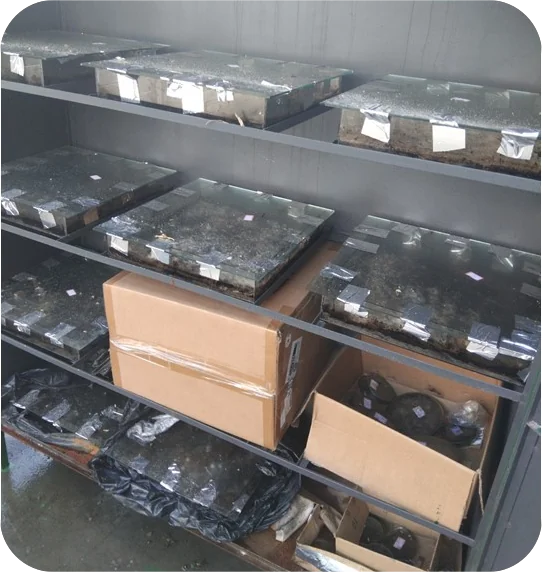
Experimental glass plates containing the microbial consortium during the biotransformation process.
Explore the Full Research
The full paper presents the experimental methodology, physicochemical characterization, and analytical results behind the production of semiconductor nanosensors from biotransformed environmental waste, highlighting their potential applications in bioelectronics, microelectronics, and health-related technologies.
